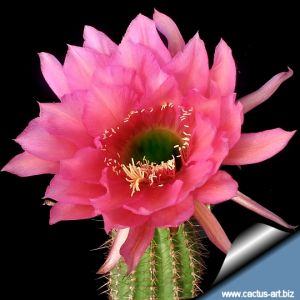
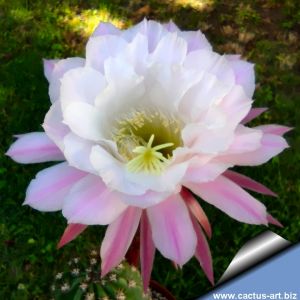
Echinocereus amoenus v. aguirre typically forms small clumps and produces large pink flowers. The stems are not pressed against each other, and the tubercles stand out noticeably. The body color is light green, gray-green or bluish.
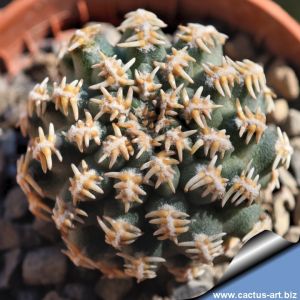
Pygmaeocereus bieblii is a fascinating little, geophytic cactus with short thick spines. It usually grows solitary but occasionally forms small clusters or even large mats flat to the ground. It is really a particular cactus with very peculiar spines.
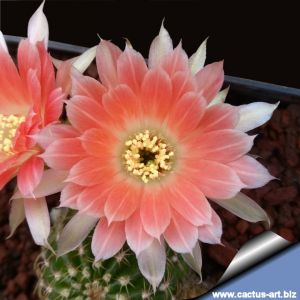
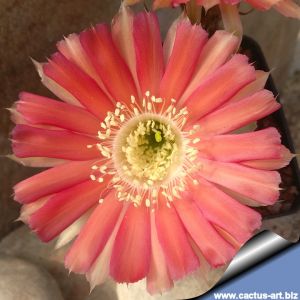
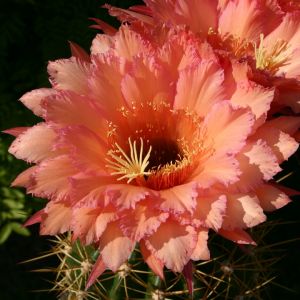
Lobivia hybrid with a large daisy-shaped flower: peach-pink petals darken toward the center and lighten at the edges, revealing a fine pale midline. A bright white throat enhances the cream-colored stamens.
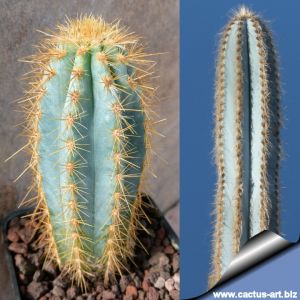
Pilosocereus azureus is one of the most spectacular columnar tree-like cereus. It ramify at the base or develops a distinct trunk with dozens of erected bluish-silver branches.. This is one of the bluest columnar cacti.
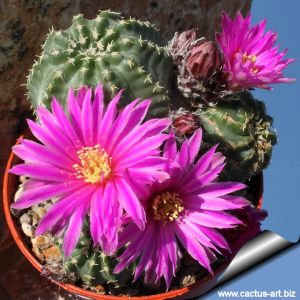
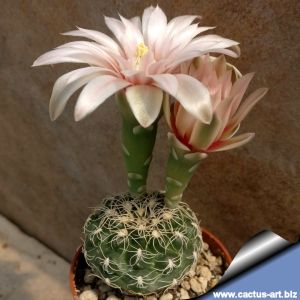
G. calochlorum v. proliferum is a clustering cactus forming low, flat-topped clusters of many stems that grow level to soil. The spines are wispy and creamy white to brown. The light pink flower is trumpet shaped with curved petals and open completely.
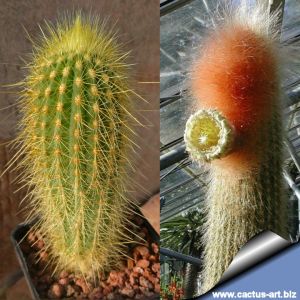
Vatricania guentheri is a shrubby columnar cactus featuring attractive golden-spined stems with varying densities of fox-red lateral cephalia. Any devoted cactophile would be thrilled to see Espostoa guentheri in its natural habitat.
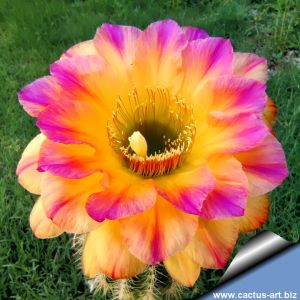
Beautiful Trichocereus hybrid with impressive two-tone flowers: vivid yellow at the center and purple toward the edges. Blossoms measure up to 15 cm across.