-
1
-
2
-
3
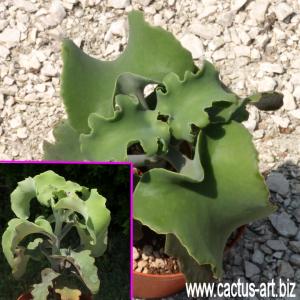
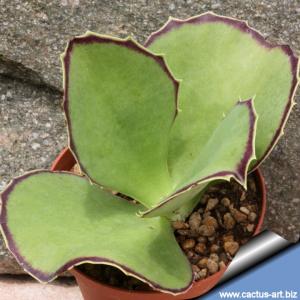
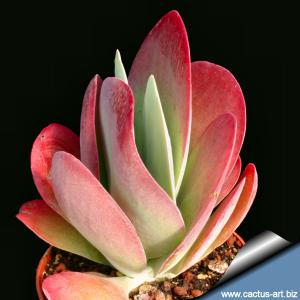
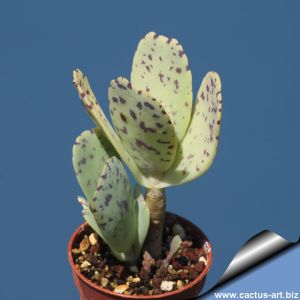
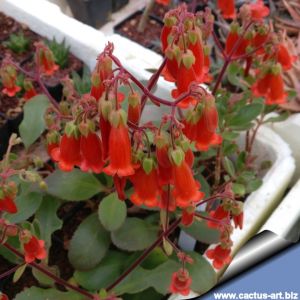
This is a large Kalanchoe with beautiful plastic-like, smooth leaves. Under the right conditions it can attain the proportions of a small tree, reaching 3 m in height.
-
4
Strong specimens in pot diameter 10 cm.
-
5
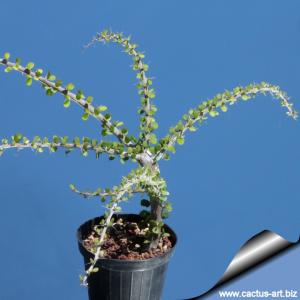
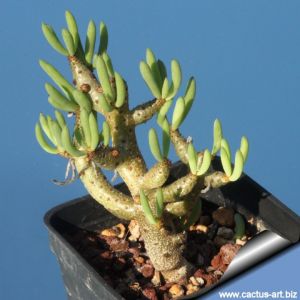
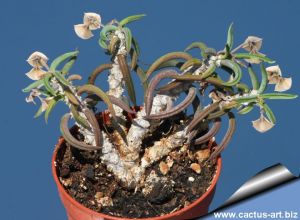
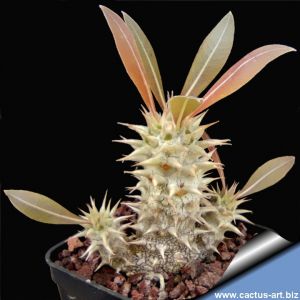
A dwarf pachycaul shrub or tree native only to Madagascar. It has a short trunk that branches just above the soil, bearing long, thin, gracefully arching branches. Fleshy, obovate leaves appear in opposite pairs, each pair subtended by a pair of spines.
-
6
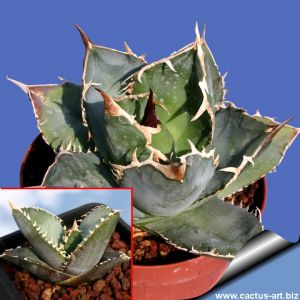
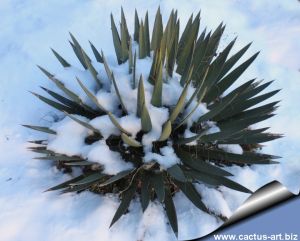
This is one of the prettiest and most sought after Agaves. The parchment-like edges and marginal spines are the unique and distinctive feature of this species.
-
7
-
8
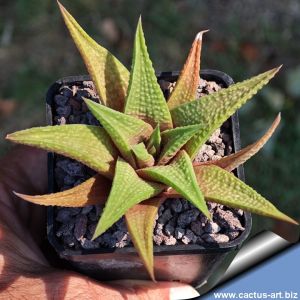
Living Geometry - 'Jade Star' forms perfect triangular leaves in cool jade tones, arranged like an origami starburst. Each rosette achieves near-mathematical precision.
-
9
-
10
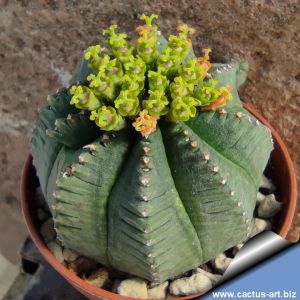
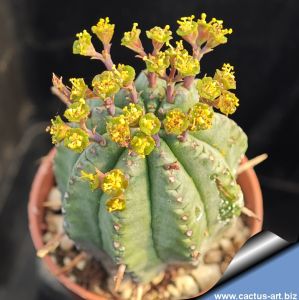
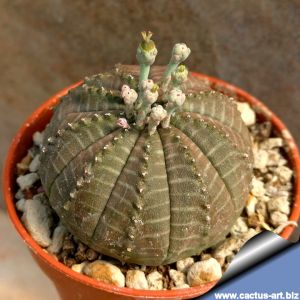
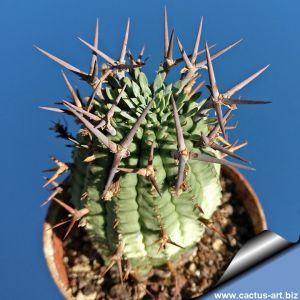
Euphorbia infausta is a small species that offsets from the base. The stem is spherical to obovoid, succulent, leafless and spineless up to 9 cm in diameter, bright deep green, marked with oblique transverse darker green (or purplish) stripes.
-
11
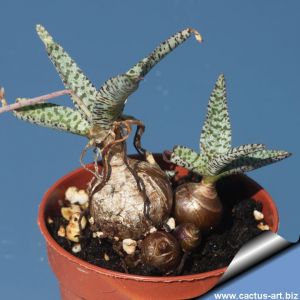
Slow-growing caudiciform succulent with nodular grey-silver to copper stems, resembling a miniature coral-like bonsai. Winter-growing species: active from late summer to spring, then deciduous and dormant in summer.
-
12
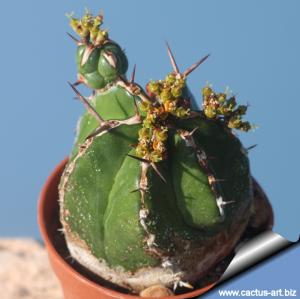
A stunning and prolific hybrid. Towards the end of winter, it is adorned with numerous small green flowers, highlighted by prominent yellow stamens. The plant has a grey-green body and few spines. Extremely decorative during flowering.
-
13
-
14
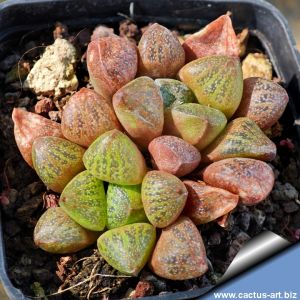
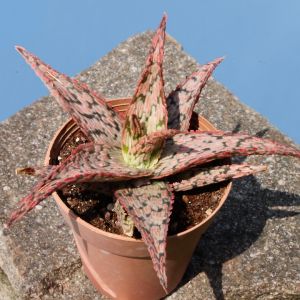
Rounded, flattened leaf tips shift from lime-green to plum tones with heavy mottling. This prolific grower forms compact colonies of interwoven rosettes that blend into living mosaics with ever-changing, speckled patterns.
-
15
-
16
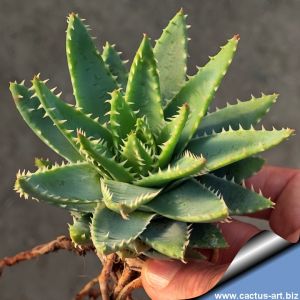
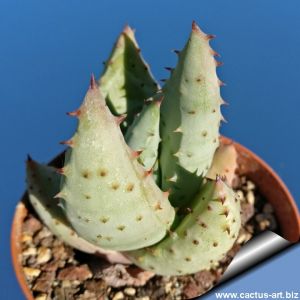
Turquoise spherical rosettes with ivory recurved spines mimic sea urchins. Aloe erinacea remained hidden until the 1980s in Namibia's rugged highlands. Each plant is a masterclass in desert adaptation and geometric beauty.
-
17
-
18
-
19
-
20
-
21
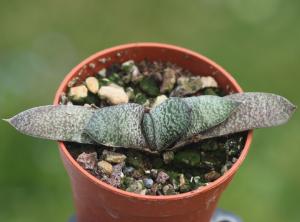
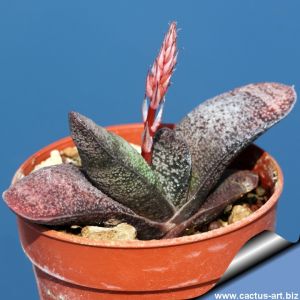
Miniature succulent with tongue-shaped leaves in light grey to dark grey-green, ending in a mucronate tip. Covered with tiny cartilaginous grey-white tubercles fused into a dense net-like pattern, giving it an overall silvery-grey appearance.
-
22
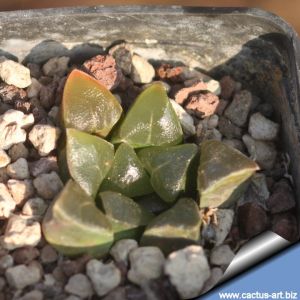
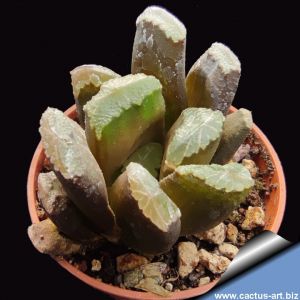
Seed-grown Haworthia truncata hybrids from diverse parentage, all individually distinct and unique. Very nice and appealing plants.
-
23
-
24
-
25
-
26
-
27
A rare and strikingly compact dwarf agave, seldom encountered in cultivation. When grown in pots, mature specimens stay no larger than 12 cm tall and wide.
-
28
-
29
-
30
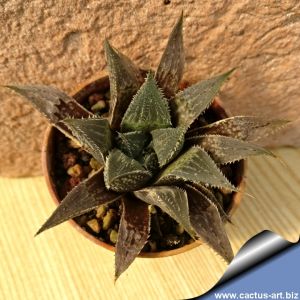
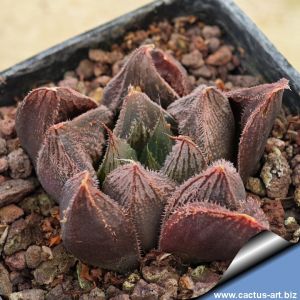
With its compact, fuzzy leaves, this Haworthia cooperi v. venusta x cv. CHOCOLATE displays a striking chocolate hue that intensifies in winter.
-
31
-
32
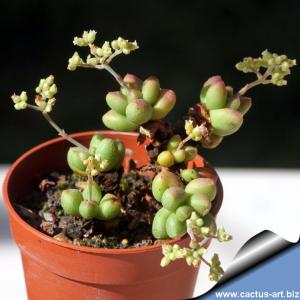
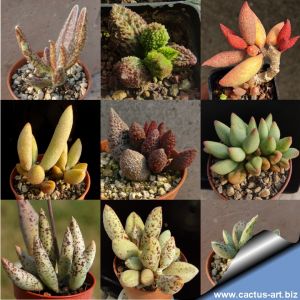
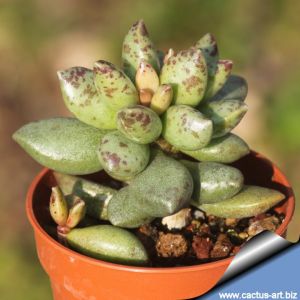
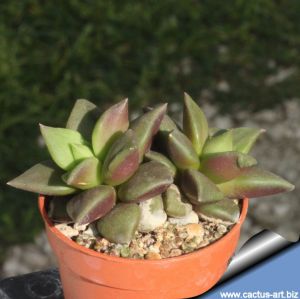
A curated mix of Adromischus marianae — a highly variable and strikingly beautiful species. Each plant is unique, showcasing diverse leaf shapes, textures, and colors, from green hues to bronze and reddish mottling.
-
33
-
34
-
35
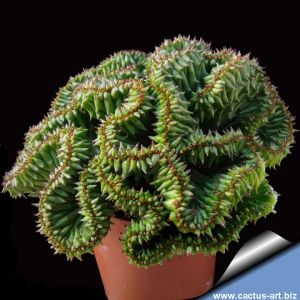
Euphorbia cv. GREEN ELF cristata forms hemispherical mounds with twisted ridges that resemble a green brain, in a few years the plants become really beautiful.
-
36
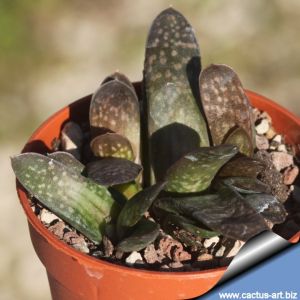
Dwarf distichous plant with dark glossy-green leaves bearing prominent, pale spots in transverse rows. Leaf tips are obtuse (hence the species name) and mucronate.
-
37
-
38
Seed-grown hybrids from a cross between H. maughanii and H. truncata. Every plant is distinct—no two are identical, ensuring truly unique and unreproducible specimens.
-
39
-
40
-
41
-
42
-
43
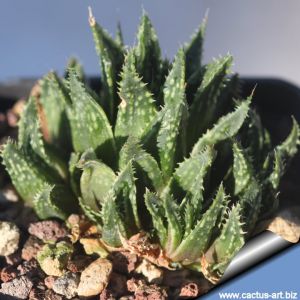
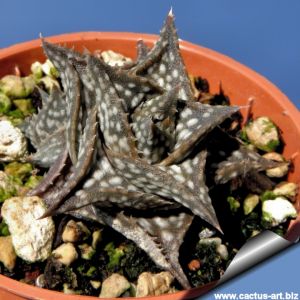
Leaves curve slightly at the tip, smooth and heavily streaked with white dots. A highly eye-catching species with strong visual impact. Very beautiful.
-
44
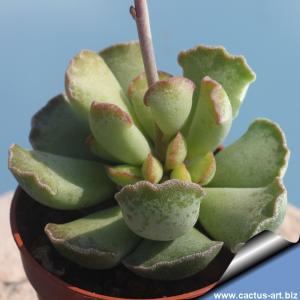
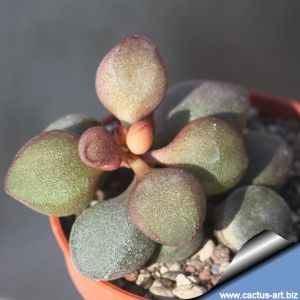
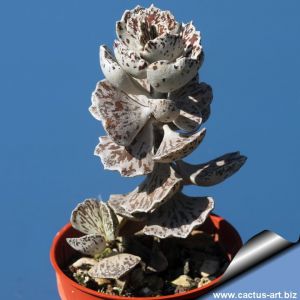
Kalanchoe rhombopilosa is a dainty small Kalanchoe, one of the smaller growing species. The leaves are rhombic or fan shaped with spectacular coppery-brown markings. The leaves are fragile and fall off at the slightest touch, especially during shipping.
-
45
-
46
-
47
-
48
-
49
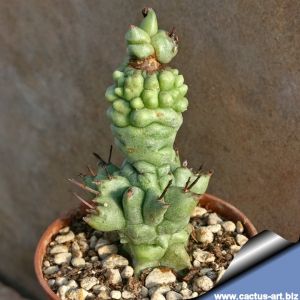
Pachypodium horombense is a succulent shrublet about 1.5 m high with a plump, bottle-shaped, main stem surmounted by a number of short fat spines. Produces Chrome-yellow flowers during the warm months of the year.
-
50
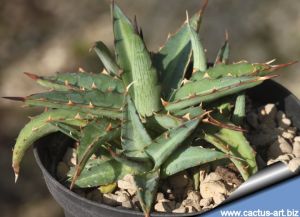
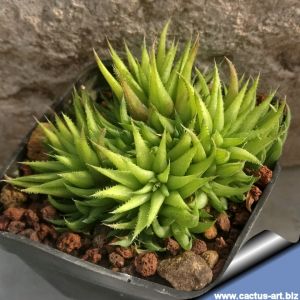
This charming dwarf agave grows perfect rosettes of slender, leathery leaves with wonderful white threads curling along their edges! The dark green blades contrast beautifully with the delicate filaments.
-
51
-
52
-
53
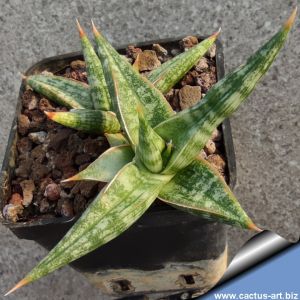
Sansevieria gracilis is a small spreading succulent. It forms rosettes of inrolled, light green leaves arranged spirally. The leaf surface has darker narrow transverse bands and longitudinal lines. It has a delightful, intensely sweet scented flower.
-
54
-
55
-
56
Glossy green leaves transform into a stunning red hue in winter. A truly striking and showy hybrid.
-
57
-
58
-
59
-
60
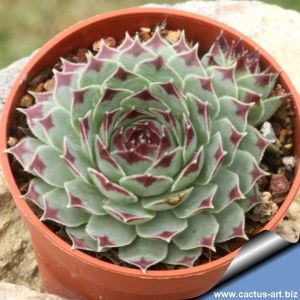
Hardy succulent forming dense rosettes of fleshy, glaucous green leaves, tipped with brown-purple. In summer, pale pink flowers appear atop tall stems.
-
61
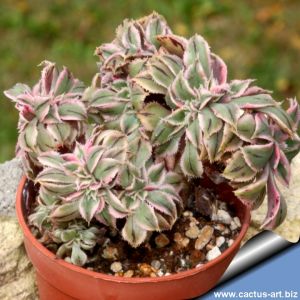
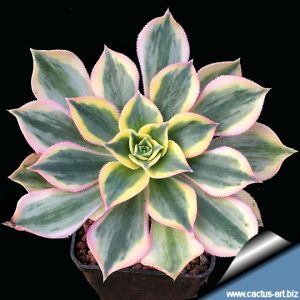
A highly prized variegated cultivar, admired for its wide, flat rosettes of fleshy leaves softly blended in pastel tones reminiscent of watercolor—cream and lime at the center, pink along the margins, with a subtle apple-green undertone.
-
62
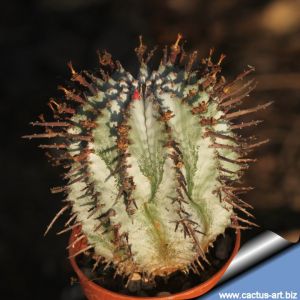
This is a rare cultivar distinguished for its roun tubercles along the ribs edges. The furrows which appear transversely on the ribs cuts the continuity of the ribs and the plants appears decorated with a geometrical design raised above the surface.
-
63
Compact, stemless rosettes with a strong tendency to clump. “Brevifolia” refers to the species’ notably short leaves. The inflorescence is an unbranched stalk ending in a dense raceme of tubular red-orange flowers. Blooms in November.
-
64
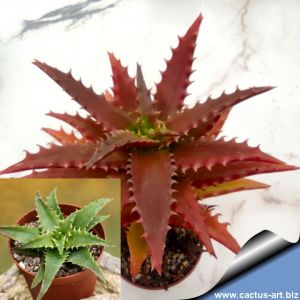
Aloe reitzii is a robust and spectacular aloe species, it is easily distinguished by the handsome erect red flower spikes that are produced in summer (unlike most aloes that produce their flowers in winter.)
-
65
-
66
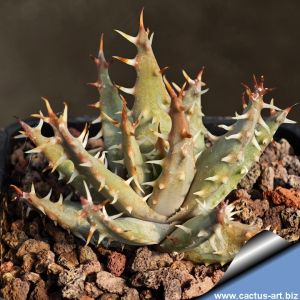
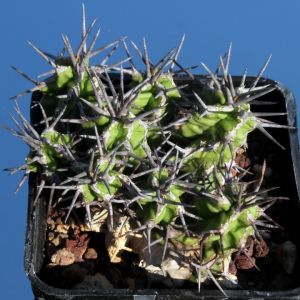
Prized by connoisseurs for its stellar star-shaped spines. Each specimen forms a living geometric sculpture, with spines radiating in perfect symmetry. An absolute must-have for serious collectors of botanical oddities!
-
67
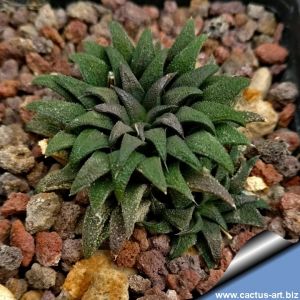
Living Jewel - H. parksiana is the smallest, darkest (near-black), and rarest. Its slowly clustering, mathematically recurved leaves create perfect shadowy rosettes - a Lilliputian masterpiece for the discerning succulent enthusiast.
-
68
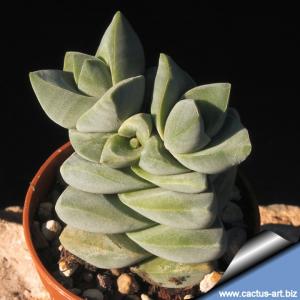
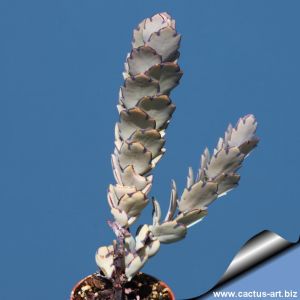
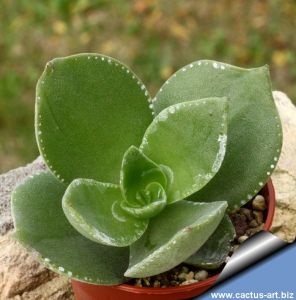
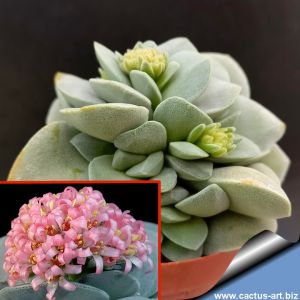
A neat, compact plant with flat, silver-green, succulent paddle-like leaves. In late winter–early spring, it bears tight inflorescences of strongly scented pink blooms, making it exceptional among Crassula species.
-
69
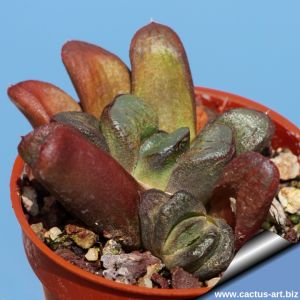
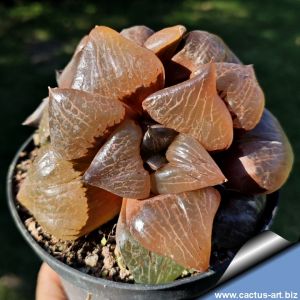
A giant among Haworthias, forming exceptional rosettes up to 20 cma cross. Its massive, glossy leaves undergo chromatic alchemy through bronze patinas, deep brown tones, and ethereal amber to sea-green translucencies that seem to trap sunlight within.
-
70
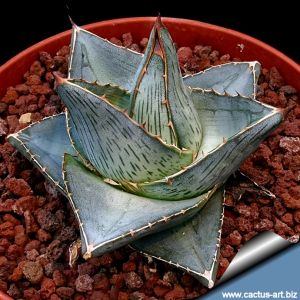
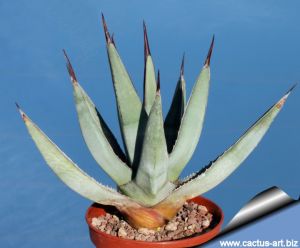
Wide, fleshy, upright blue-gray leaves and a large black terminal spine. Originating in North America, Agave x nigra is thought to be a natural hybrid of A. victoria-reginae and A. asperrima (or A. scabra) combining elegance elegance and strength.
-
71
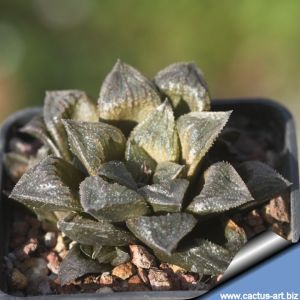
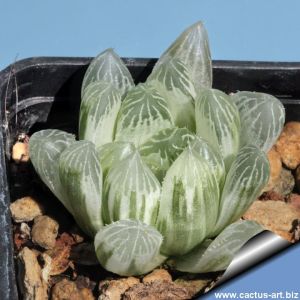
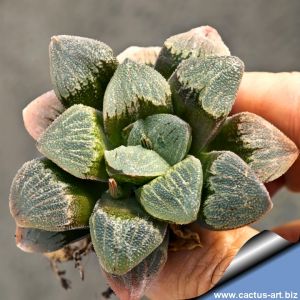
A “pygmaea-retusa-truncata” hybrid with triangular leaves and windowed tips marked by translucent veins. The raised minute tubercles give the surface an icy, glass-matte appearance, making this cultivar particularly decorative and highly desirable.
-
72
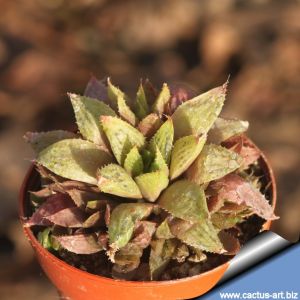
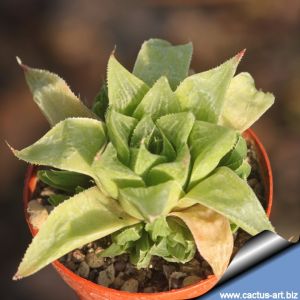
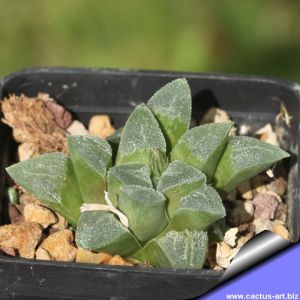
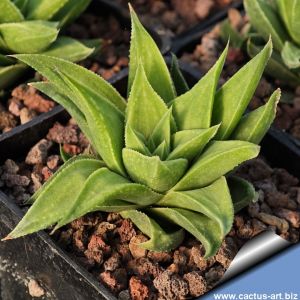
A no-fuss hybrid with firm, triangular, light green leaves and finely serrated edges. Slow-growing and exceptionally low-maintenance, it’s perfect for beginners. Thrives in pots and adapts easily to various
indoor conditions.