-
1
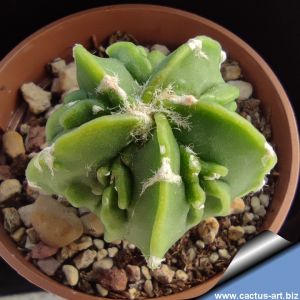
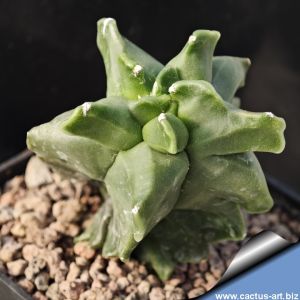
Irregular growth with both bare areoles and spiny areoles in alternating bands.
-
2
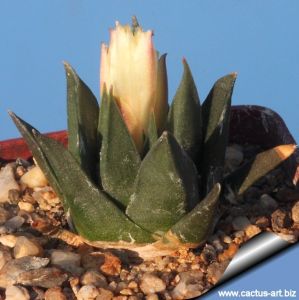
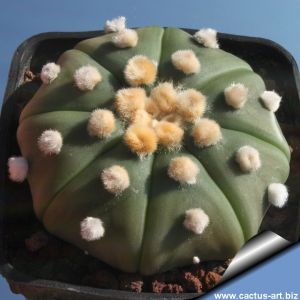
It blooms already at only 3-4 cm in diameter. Long, pointed and vertical tubercles. Yellow flower.
-
3
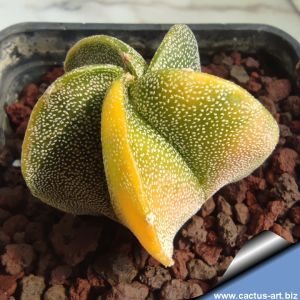
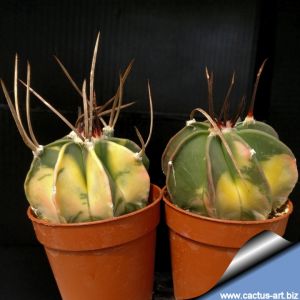
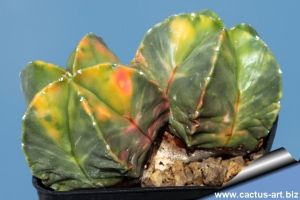
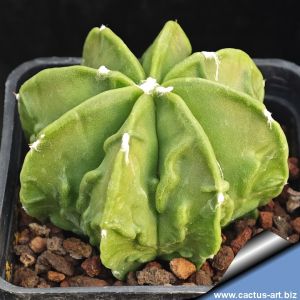
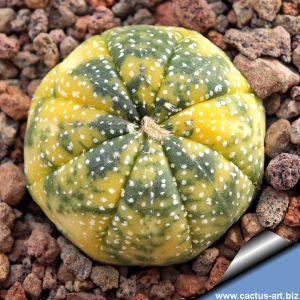
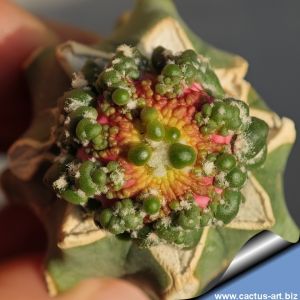
Green star-shaped body, with variegated areas from yellow to pink-purple. Each plant is particular, with a combination of colors and patterns that make it unique.
-
4
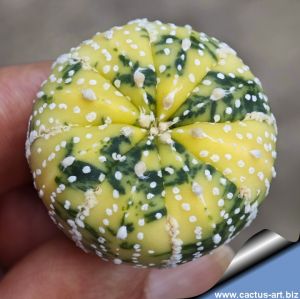
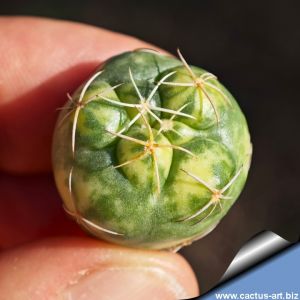
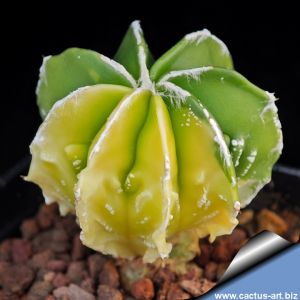
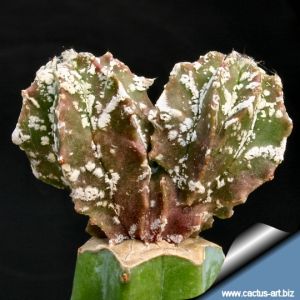
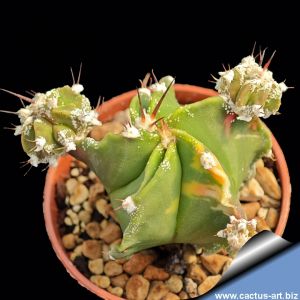
Variegated plants have sectors, patches or stripes with two or more colours. Plants with variegated body are highly prized. Each specimen different and particular.
-
5
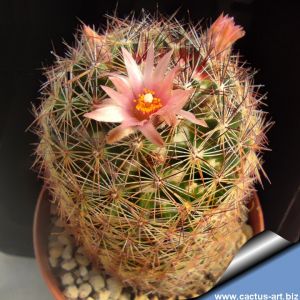
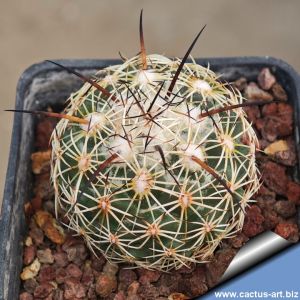
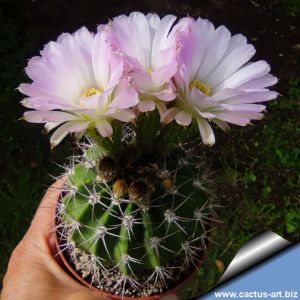
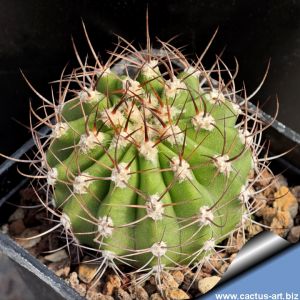
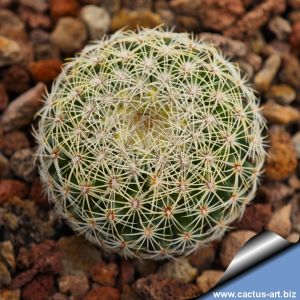
A very spiny cactus with single or occasionally clustering stems. Short tubercles are densely covered with white or light-brown radial spines and stronger central ones that often hide the stem. Small pale-pink to soft-violet flowers bloom at the apex.
-
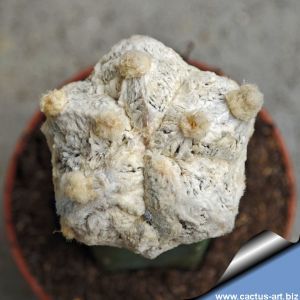
6
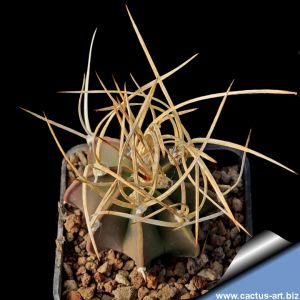
-
7
-
8
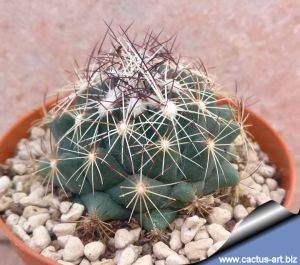
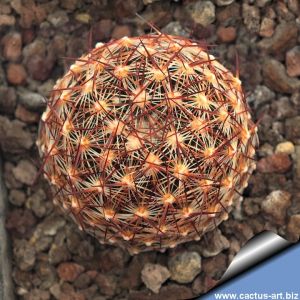
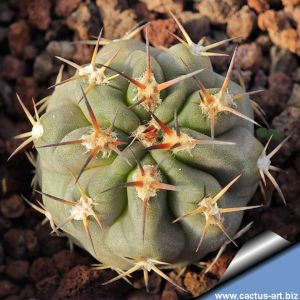
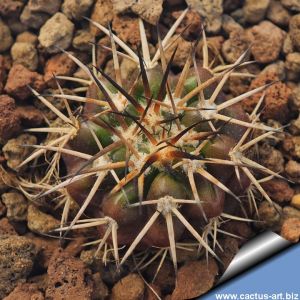
Exceptionally tough, featuring large woolly beige areoles, creamy radial spines, and striking brick-red centrals. Lovely! Fully winter hardy (winterhart).
-
9
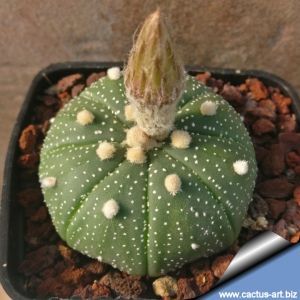
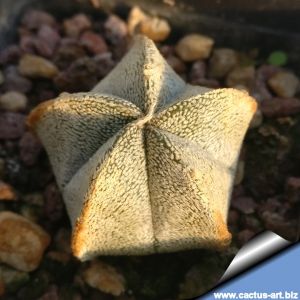
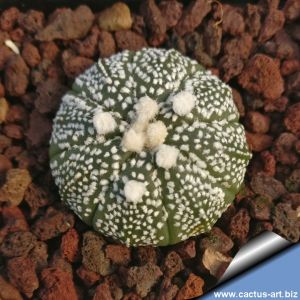
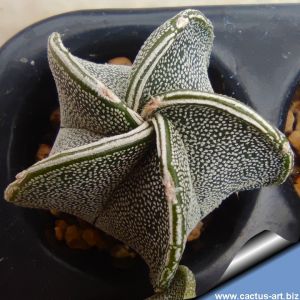
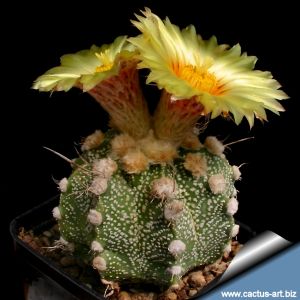
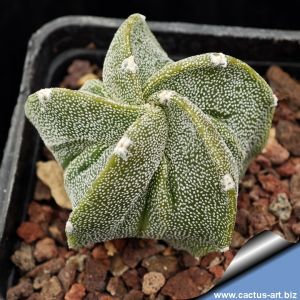
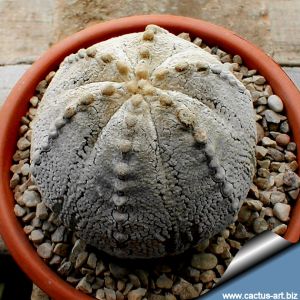
Astrophytum asterias is small, round, spineless and squat cactus. The disc-shaped body is divided into 8 ribs, greenish-brown and may appear speckled from its covering of white scales. The flowers of this cactus are yellow with red red bases.
-
10
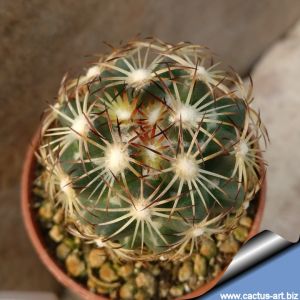
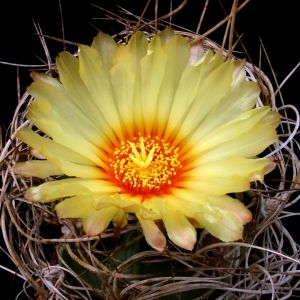
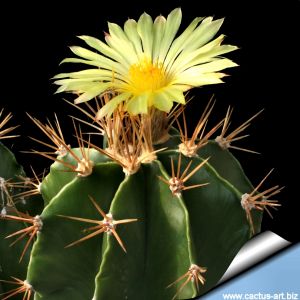
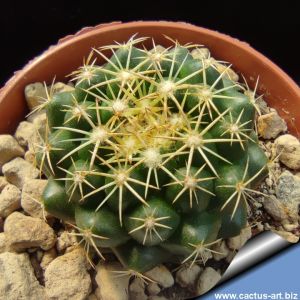
Variety with a round, dark green body and stiff, pectinate spines. It produces large yellow flowers with red anthers. A truly captivating plant.
-
11
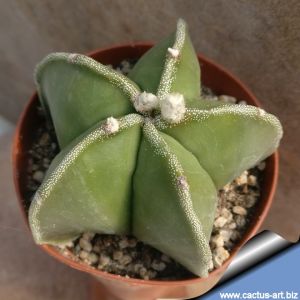
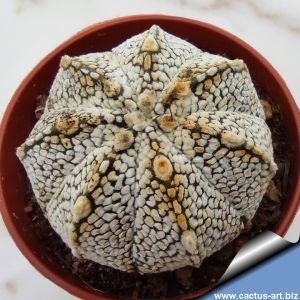
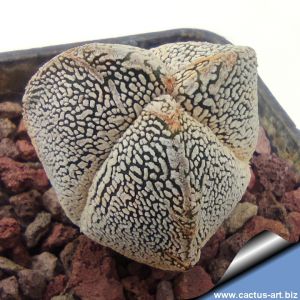
Astrophytum myriostigma var. subnudum (partially naked form) is similar to A. myriostigma nudum, but deviates from it for having only a few white spots. The spots often form nice patterned designes on the dark green body.
-
12
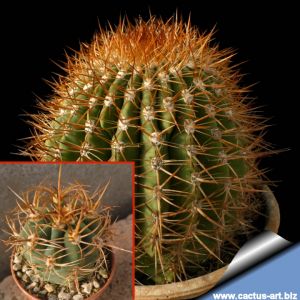
Denmoza rhodacantha cv. Orange Spines is an outstanding cultivars with strong orange to rich-amber coloured spines instead of brownish red. This plant has been selected in cultivation and is propagated by controlled pollination.
-
13
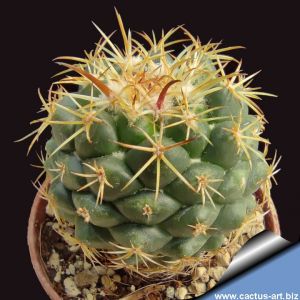
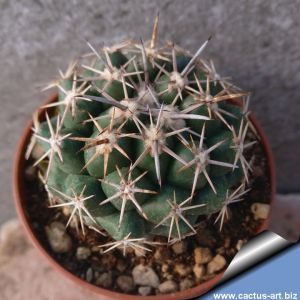
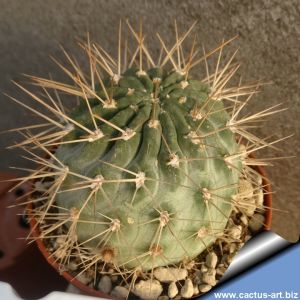
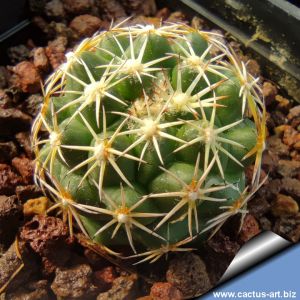
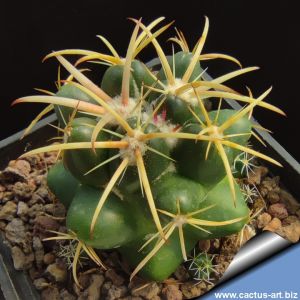
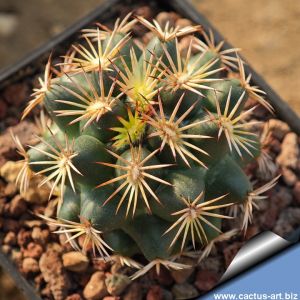
Coryphantha difficills (difficult pincushion) is a long-lived cactus that only starts reproducing after 15 years. The curved spines range from white to rust red. Generally, it does not offset into clusters.
-
14
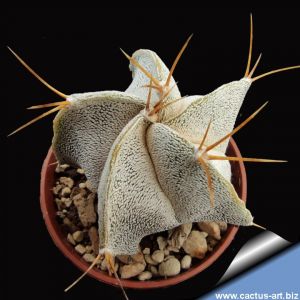
-
15
-
16
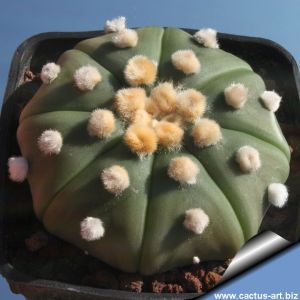
Astrophytum asterias cv. Ooibo is similar to the standard A.asterias, but it has very large characteristic and woolly areoles. So it is easily distinguishable from the common asterias that has relatively small scarcely woolly greys-white areoles.
-
17
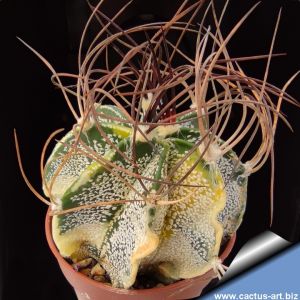
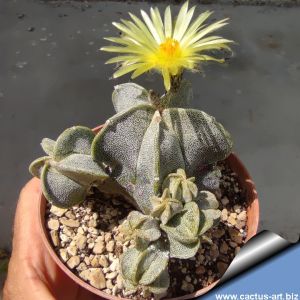
Astrophytum senile is a variety of A. capricorne that has beautiful yellow flowers with a red center and long flexible spines so densely wrapped that the body is barely visible and looks like a bundle of dry grass.
-
18
Hybrids from controlled pollination of ♀A. asterias "Superkabuto" × ♂A. coahuilense. Typically show 8 sharper ribs than Superkabuto (clearly expressing coahuilense traits), with stems covered in large white wool-like flecking. Stunning intermediate forms.
-
19
(Seedling on its own roots) This is a Japanese selected strain with very large characteristic and woolly areole in combination with the green epidermis of "RURI KABUTO" (nudum). It is one of the most famous and peculiar Japanese Astrophytum cultivars.
-
20
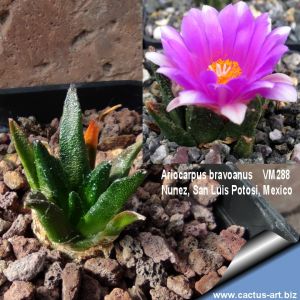
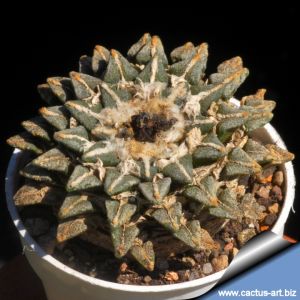
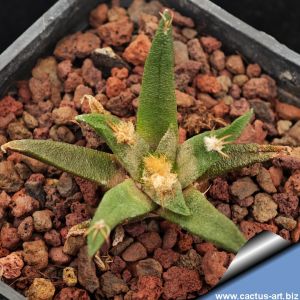
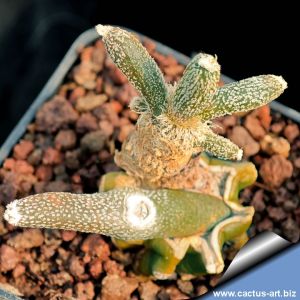
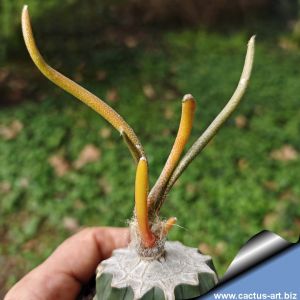
Very attractive, small geophytic cactus, forming a solitary rosette with dark green, verrucose tubercles.
-
21
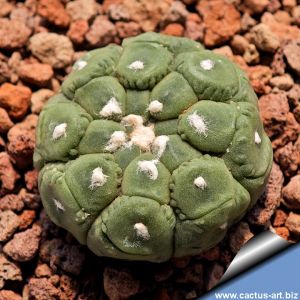
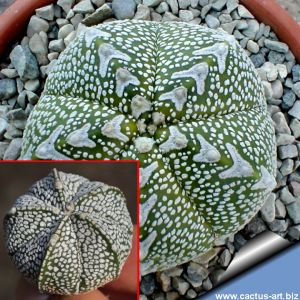
NEW RELEASE! Beautiful Thai selection with prominent woolly spots creating a crisp white pattern on the ribs. Stock is very limited, and additional availability cannot be assured.
-
22
Coryphantha scolymoides has pale green stems, with tubercles ascending like tiles, spines numerous, radials ones flesh-coloured with a single central spine recurved, black, grey at the base. Flowers large, yellow with read throat.
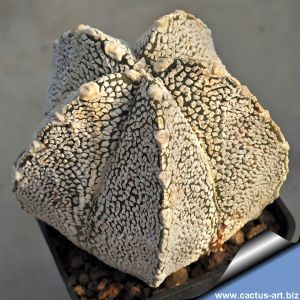
-
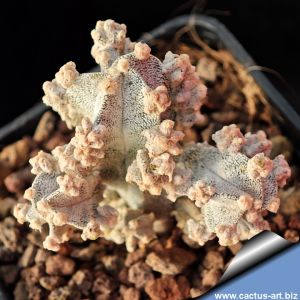
23
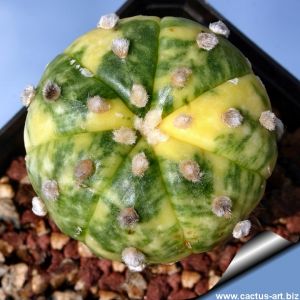
Variegated plants have sectors, patches or stripes with two or more colours. Plants with variegated body are highly prized. Very variable.
-
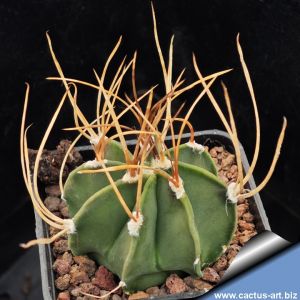
24
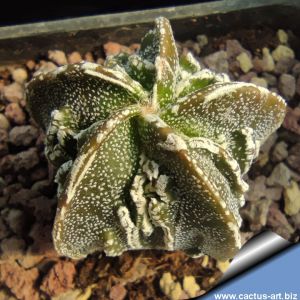
(Type B - HEKIRAN FUKURYU + RURI KABUTO) The Japanese term FUKURYU indicates the presence of small lateral rib-like protrusions, lacking areoles, that develop between two main ribs. Meanwhile, RURI refers to smooth-bodied individuals without dots.
-
25
This particular cultivar differs from the typical A. asterias due to the starry rather than rounded stem and the large felted areoles. The skin is dull green and smooth.
-
26
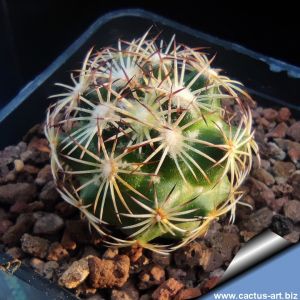
Round dark green body, whitish radial spines, darker hooked central spine, large yellow flower. In culture Coryphantha pallida is without problems and regularly shows its large pale yellow flowers.
-
27
Variegated plants have sectors, patches or stripes with two or more colours. Plants with variegated body are highly prized. Very variable.
-
28
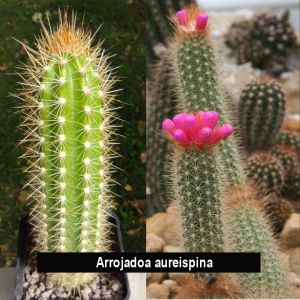
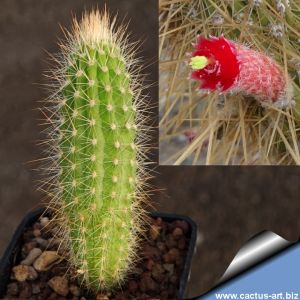
Arrojadoa aureispina is a clustered, cylinder-shaped cactus that produces apical clusters of pinkish purple flowers. The specific name “aureispina”, yellow spined, refers to characteristic golden-yellow spines of this plant.
-
29
Elegant white flowers tinged with violet. Beautiful!
-
30
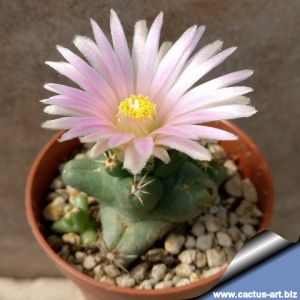
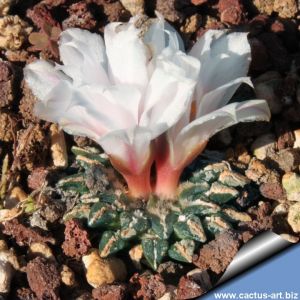
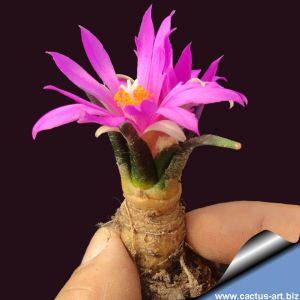
A small and highly attractive variety with disk-like bodies and flattened triangular tubercles barely rising above the soil. The main body is a large underground caudex. Flowers are white or very pale pink.
-
31
Plant with round, dark green stems, white-yellow radial spines, and a dark, arched central spine. Large, glossy yellow flowers.
-
32
Occasional few short spines per areole (extremely rare trait). At flowering size already!
-
33
A star-shaped disk that lives half-buried! It forms flat, geometric rosettes no larger than a coin and hides a long, fleshy taproot underground. A gem for lovers of camouflaged, minimalist plants.
-
34
The Japanese HAKU-JO cultivar features fuzzy areoles along its ribs, forming a double felt line that makes it appear as though the areoles are linked together.
-
35
-
36
Rare variety that combines the irregular ribs of FUKURYU with the felt lines of HAKU-JO on the edge of the ribs. As the plants get older they become more and more beautiful.
-
37
(HEKIRAN FUKURYU Type B + RURI KABUTO) Distinguished by unique supplemental rib structures and naked body without dots.
"multicostatum" = 6-7 (or more) ribs.
-
38
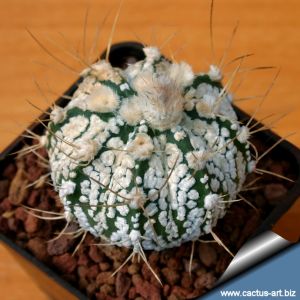
A rare Astrophytum cultivar combining a three-ribbed (tricostate) form with dense, irregular white flecking (ONZUKA pattern) . A special plant highly sought after by collectors for its clean, sculptural look. Each specimen has a unique pattern.
-
39
Massive tubercles bearing formidable fang-like spines - spreading unevenly, curved, and appressed (never upright). Noticeably lacks central spines. Produces showy yellow flowers.
-
40
Plants obtained by controlled pollination of Astrophytum myriostigma x Astrophytum ornatum. Ribs are sharp usually 5 (like in A. myriostigma) spineless or with variable spines.
This hybrid are strong growing. The flower are also very beautiful.
-
41
A magnificent variety with long, flat, and contorted spines, showcasing a unique color ranging from ivory-white to pale beige.
-
42
Plants obtained by controlled pollination of ♀Astrophytum asterias x ♂Astrophytum senilis aureum. Ribs sharp with very short spines and yellow woolly areoles. As the plant ages the areoles become more and more large, woolly and colourful.
-
43
Rootted cuttings not grafted.
-
44
Variety with greener, elongated tubercles and a firm lizard-skin-like texture. Short yellow spines emerge from large woolly areoles. Green in shade, it turns purple in full sun.
-
45
-
46
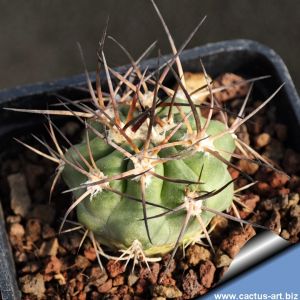
Superb plant with a greyish body and very strong, long spines in brown-red to black tones. Bears a bright yellow flower that contrasts vividly against the dark, spiny form.
-
47
Hybrid A. capricorne x A. asterias 'Superkabuto'. This hybrid inherited large white spots from “Superkabuto”.The ribs are also noticeably raised, clearly indicating kinship with A. capricorne. The flower are also very beautiful.
-
48
Small grey-green, glaucous body, new spines dark, later greyish, flower yellow.
-
49
-
50
-
51
These plants merge the vivid yellow, orange, or reddish variegation of “NISHIKI” against a deep green base with the “RURY KABUTO” (nudum) type, known for its absence of white dots. Every specimen is one-of-a-kind, displaying uniquely decorative designs.
-
52
The Japanese cultivar “Nishiki” stands out for its vibrant yellow, orange, or reddish variegation against a dark green background, creating unique, high-impact patterns. An iconic and essential plant for any collection.
-
53
A gorgeous plant featuring a bicolored stem with yellow and green zones or stripes. Its vibrant contrast and irregular patterns make it truly eye-catching and unforgettable.
-
54
Selected form with very elongated tubercles. Graceful and distinctive. Grown from seed, quite variable. Japanese cultivar still quite rare in collection, seldom offered for sale.
-
55
The variety pulvinicapitatus is a particular form of Discocactus placentiformis, distinguished by the shape of its body, which tends to be more flattened and develops a more pronounced and "cushion-like" cephalium.
-
56
This plant is an example of a cross between two of the most popular Astrophytum cultivars (Astrophytum asterias "SUPERKABUTO" x Astrophytum myriostigma "ONZUKA"); the resulting interspecific F1 hybrid shows intermediate characteristics from both parents.
-
57
Astrophytum multihybrid of variable shape and color. Each plant different and original. Grown from seed.
-
58
Olive green body, straight rather thin ribs, litght pinkish flowers - nice variety!
-
59
A remarkable hybrid of Astrophytum caput-medusae and A. myriostigma, featuring shorter and chunkier tubercles than A. caput-medusae. Exceptionally rare, with extremely limited availability. Grafted specimen.
-
60
Thin, elongated tubercles, mottled with yellow and green, which take on a lovely pinkish-red hue in winter. Grafted plants, very beautiful.
-
61
Beautiful Japanese cultivar with characteristic cloud-like white patches on a smooth green body. The pattern creates a soft, artistic contrast.
-
62
A dream Myriostigma! The cottony dots are so densely packed they form a continuous, seamless covering. The effect is delicate, elegant, and hypnotic, with a smooth, velvety texture that draws the eye and holds attention.
-
63
Atypical variety that grows in a branching pattern, sprouting new shoots from the areoles and forming small clusters over time.
-
64
Japanese cultivar with raised conical tubercles resembling a tortoise shell (hence the name "Kitsu-kow"). This special clone frequently features bright pink new growth, adding an extra layer of visual appeal. CLONE 1, GRAFTED:
-
65
Type A: This is the most common form with small, partially developed extra ribs. Typically, these small additional ribs do not reach the apex of the plant, lack areoles, and develop on the lateral side, situated between two adjacent true ribs.
-
66
Plant with sharp green/bluish ribs sometimes tinged with purple without white flakes. Spines golden yellow or amber, long and pointing in all directions, often so densely nest wrapped that the body is barely visible and looks like a bundle of dry grass.
-
67
A Bolivian columnar cactus with branched stems densely covered in thin, translucent white-yellow spines, creating a "glassy" look. Bears striking orange-red tubular flowers against its unique spination.
-
68
Striking plants featuring elongated areoles and spines aligned in a comb-like pattern.
-
69
Long spines in a golden-brown hue and yellow blooms.
-
70
These prized Astrophytum hybrids combine A. asterias "SUPER KABUTO"'s large white spots with A. coahuilense's fluffy, wool-like flecking. Their five symmetrical ribs showcase nature's perfect balance of rarity and geometric beauty.
-
71
A slow-growing botanical treasure, cloaked in dense white-to-yellow radial spines. Central spines, brown in color, appear only several years after germination, culminating in a dramatic display. The vivid yellow flowering is truly spectacular.
-
72
Astrophytum hybrid OR-MY (A. ornatum × A. myriostigma), nude and variegated. Rare naturally branching specimens with smooth green skin and unique cream, yellow, or pink variegation. Highly collectible and sporadically available.