-
1
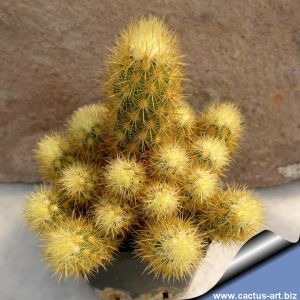
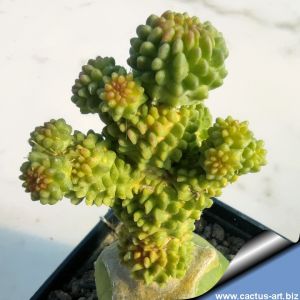
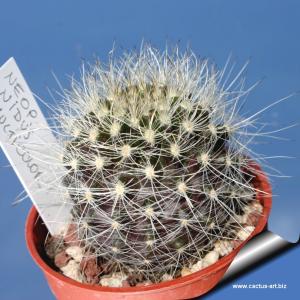
This uncommon (but very nice) cactus, has tiny finger shaped stems and will slowly form small clusters with dense golden spines. Spines are gold-amber coloured. Flowers tiny pale yellow on the apex.
-
2
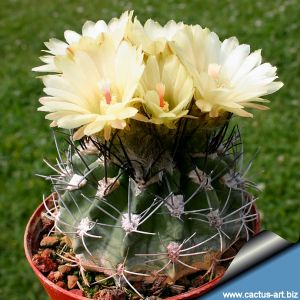
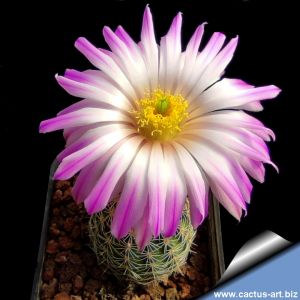
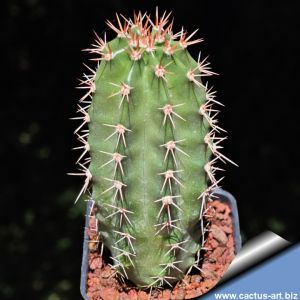
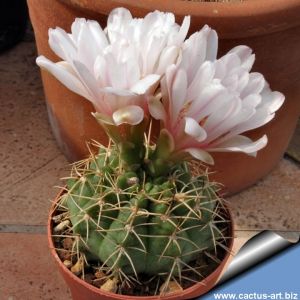
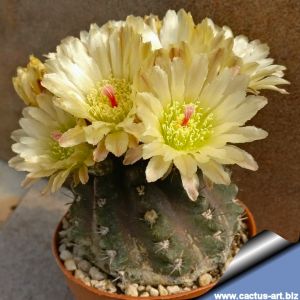
This is a very beautiful and peculiar plant. The green body contrasts with the black spines. The creamy white flowers with pink hues are very pretty.
-
3
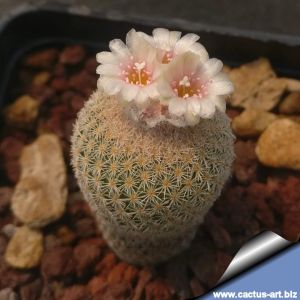
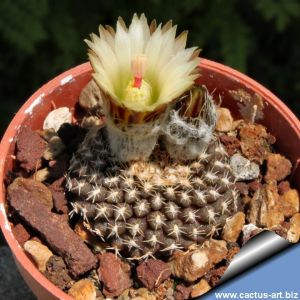
This is a petite cactus, which branches and becomes somewhat elongated when old. The short spines are appressed to its body, reddish-gray or brownish in the crown of adult plants. Small creamy pink flowers sprout from the wool at the apex.
-
4
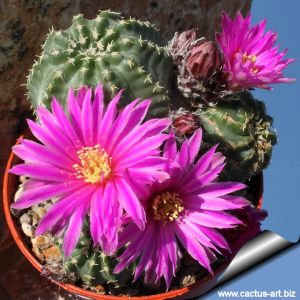
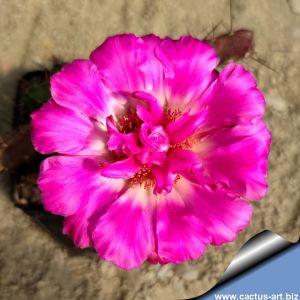
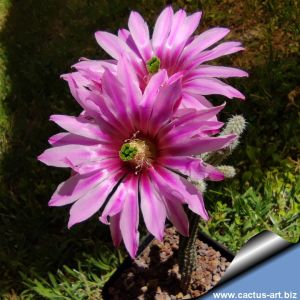
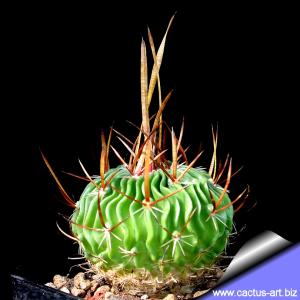
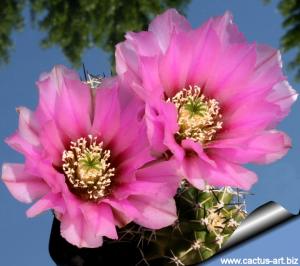
Echinocereus amoenus v. aguirre typically forms small clumps and produces large pink flowers. The stems are not pressed against each other, and the tubercles stand out noticeably. The body color is light green, gray-green or bluish.
-
5
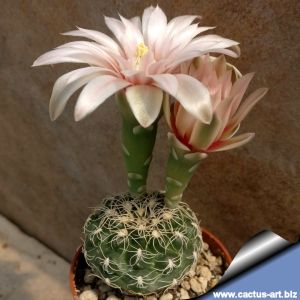
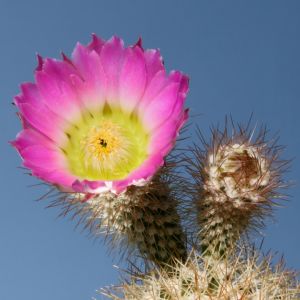
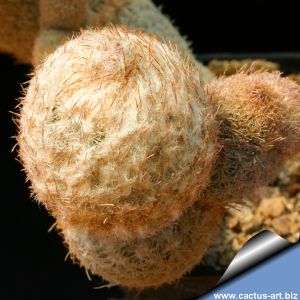
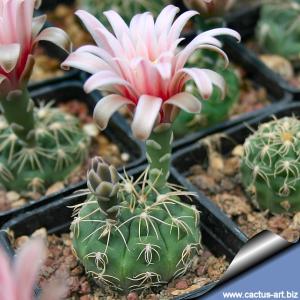
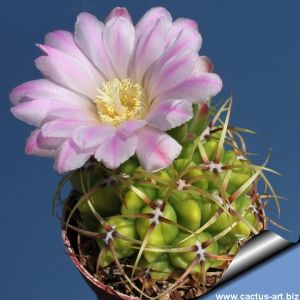
G. calochlorum v. proliferum is a clustering cactus forming low, flat-topped clusters of many stems that grow level to soil. The spines are wispy and creamy white to brown. The light pink flower is trumpet shaped with curved petals and open completely.
-
6
-
7
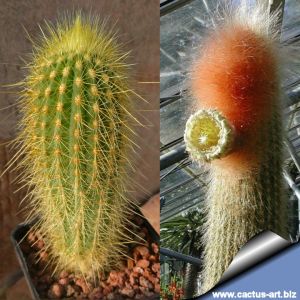
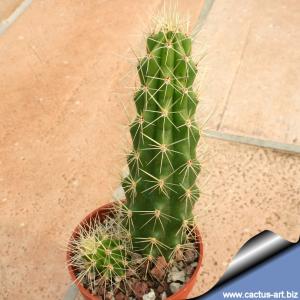
Vatricania guentheri is a shrubby columnar cactus featuring attractive golden-spined stems with varying densities of fox-red lateral cephalia. Any devoted cactophile would be thrilled to see Espostoa guentheri in its natural habitat.
-
8
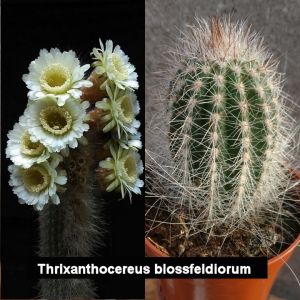
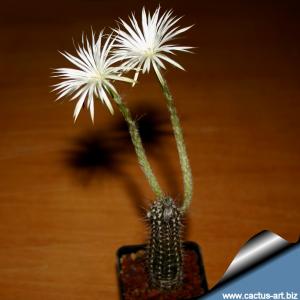
Trixanthocereus blossfeldiorum is a columnar cactus up to 2.5 m tall, it is now classified in the Espostoa and flowers 3 or 4 times in the summer, but you have to get up early because the flowers only last one night, but a wonderfull display!
-
9
-
10
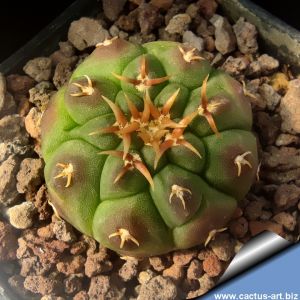
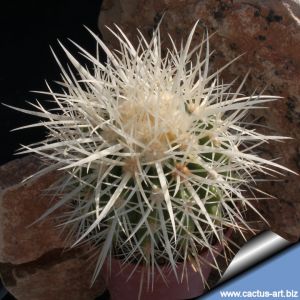
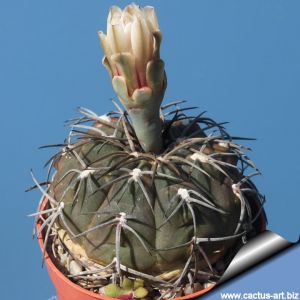
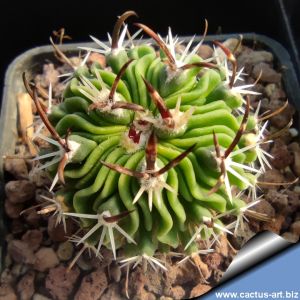
A rare form of G. vatteri, easily recognized by its three short, thick, ivory-coloured spines per areole, elegantly bent downward and outward, reminiscent of an eagle’s talons.
-
11
A remarkable plant featuring ribs with delicate lines that transition from creamy white to green, and even to a very dark purple. During winter, the colors shift to warmer hues like cream, ochre, and mahogany. Absolutely stunning.
-
12
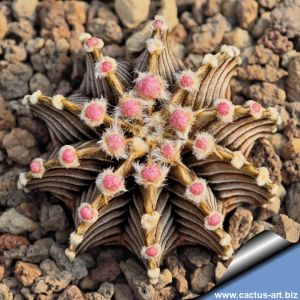
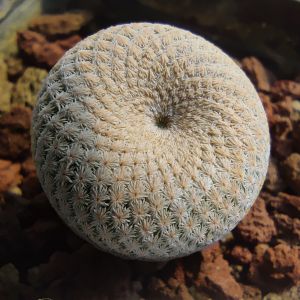
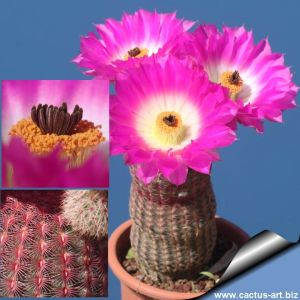
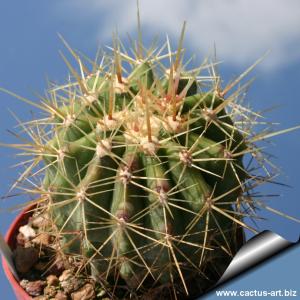
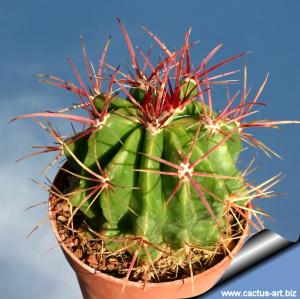
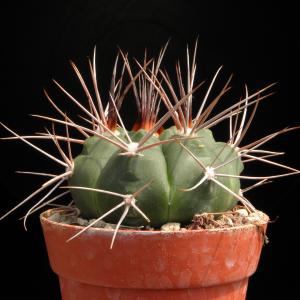
Exquisitely crafted miniature cactus. Its dense, appressed spines create such perfect embroidery that the stem feels smooth to touch. Adorable pink flowers crown what is undoubtedly one of nature's most perfect small-scale creations.
-
13
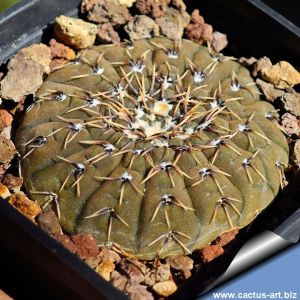
Dark olive-brown stem, very flat, growing at ground level. Short spines pressed against the body. Beautiful plant but very slow growing.
-
14
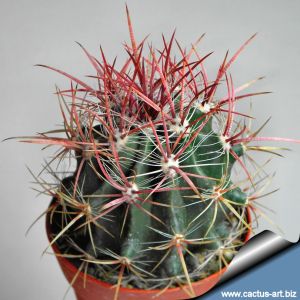
A rare, entirely spineless form, presumed to be a mutant of Echinofossulocactus albatus. The pale green stem bears delicate, subtly wavy ribs divided into short, elongated tubercles.
-
15
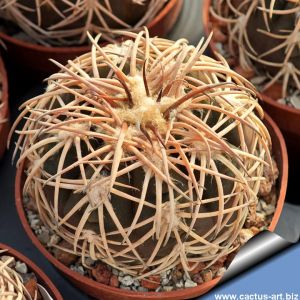
Exceptional plants grown in Ø 6.5 cm pots, cultivated in full sun and showing stunning spination. Flattened, dark brown body with recurved, downward-pointing spines closely appressed to the stem. An opportunity not to be missed!!!
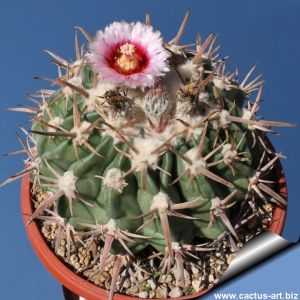
-
16
OWN ROOTS ! This is a free offsetting small form of E. grusonii that is covered by yellowhish-white wool with short yellow spines. The rib structure is not yet apparent, and they have pronounced tubercles making them look superficially like Mammillaria.
-
17
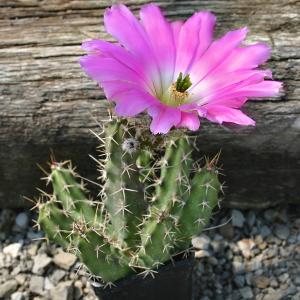
Echinocereus sciurus subs. floresii, also known as Echinocereus floresii produces bright pink flowers up to 5 cm long and 7 cm wide the sides of the plant, well below the stem tips.
-
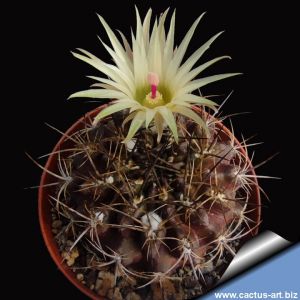
18
-
19
-
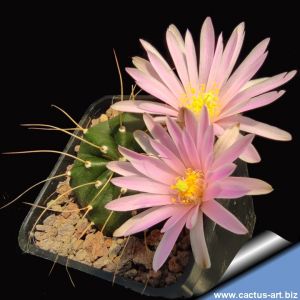
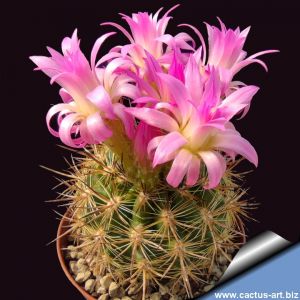
20
The Echinocactus grusonii v. albispinus looks just like a regular golden barrel but the spines are all glassy-white instead of yellow.This is a very nice plant.
-
21
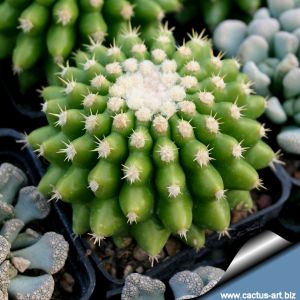
This unique and unmistacable species has plump, soft, flattened or globose , dark green stems remenbering an unripe tomato. Large pink flower open in spring. The thick tuberous root requires adequately sized pots.
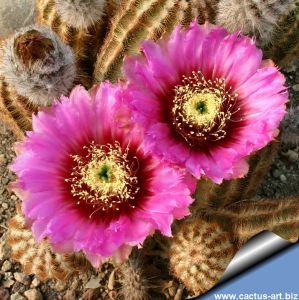
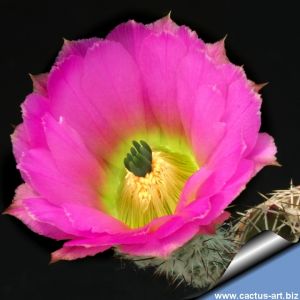
-
22
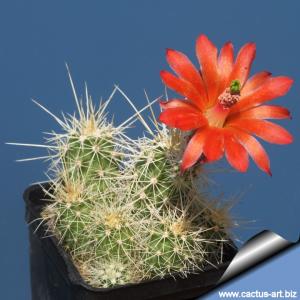
It is a very untypical Echinocereus that does not take on the usual hedgehog shape. It is long and vine-like with slim, pendant sprawling stems, usually tangled with many branches up to 250 cm long. Rare in cultivation. Beautiful long orange-red flowers.
-
23
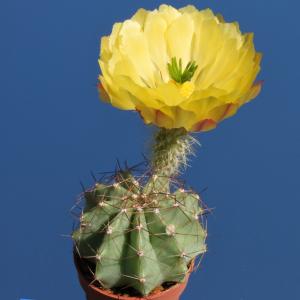
-
24
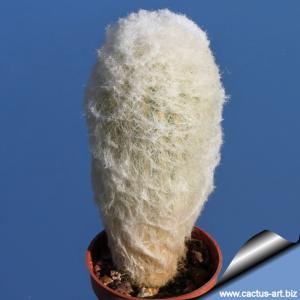
Solitary or few branche cylindrical stems. Radial spines, straight or slightly curved, lie close in two nearly pectinate series, white, beige, dull pink, brown, or purplish-black. Central spines often absent. Fragrant dark-purple flowers, 5–7 cm wide.
-
25
This is a "must have" plant for any collection, its attractiveness is in the unique pink and violet colour and density of its spines.
-
26
-
27
It can grow as many as about 50 stems in a relatively large clump. They bloom from April through July, and are very showy. Blooming generally begins 7 to 10 years after sowing, as the plant matures. In cultivation it often grows for a long time solitary.
-
28
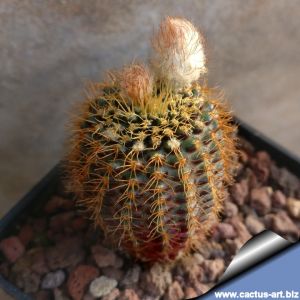
Tiny, clump-forming species. Elongated, slender stems (1–3 cm in diameter) with beige spines; the longest emerge from a dense woolly apex and have rust-colored tips.
-
29
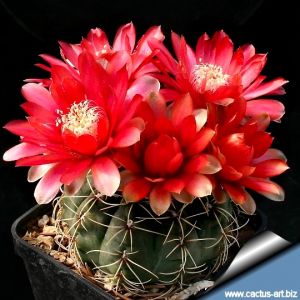
Gymnocalycium baldianum is regarded as one of the most floriferous and easy-to-grow cacti, prized for its reliable blooming and low maintenance. Flowers are typically vivid red, sometimes appearing in various pink shades.
-
30
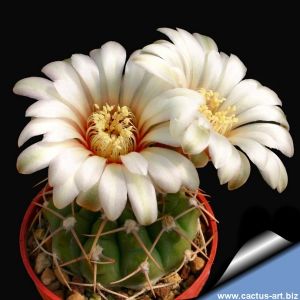
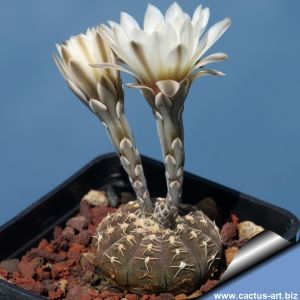
Small plants with a very flattened body, the flower are large pinkish-white and the fruits are blue and very decorative.
-
31
-
32
Green, spherical-flattened stem with 13-15 ribs and pointed tubercles. It has 5-7 sturdy, imposing spines per areola. The real show comes when the large pink flowers with a deep red center appear: a perfect wonder for any succulent love
-
33
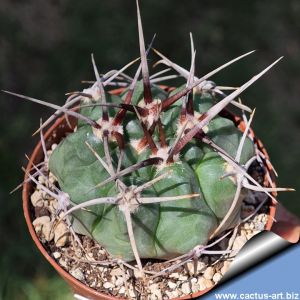
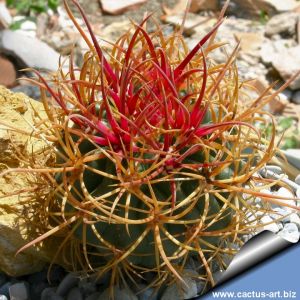
Strongly spined and hardy species from Argentina with long stiff yellow translucent spines with a red base on a bright green background. This is one of the most admired species in cactus collections.
-
34
Highly valued by collectors for its flattened form with ribs marked by well-defined tubercles. Generous blooming with large funnel-shaped flowers up to 7 cm in diameter, in attractive pink tones.
-
35
Nice slow growing species, stem flattened, spines addpressed agaist the stem of the plant. Generally solitary but old specimens may cluster from the base.
-
36
The "dadakii" form is globular, depressed on top, with about 12 ribs. It branches profusely from the base forming soon dense clumps. The spines are all radial, usually 8, brownish passing to white, curved backwards and twisted.
-
37
A slow-growing, nearly disc-shaped stem, extremely flattened and scarcely emerging from the soil, displaying hues from greenish-grey and dull olive to purplish-brown and almost brick-red. Produces clustered white flowers from June to September.
-
38
Rare and sometimes sold as F. pottsii var. alamosanus, this Ferocactus shows relatively short, straight spines with shades from yellow to red. An uncommon species valued for its striking spine coloration.
-
39
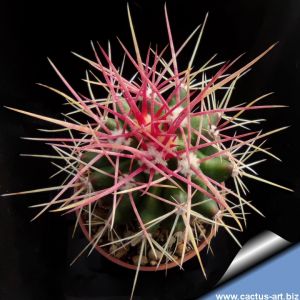
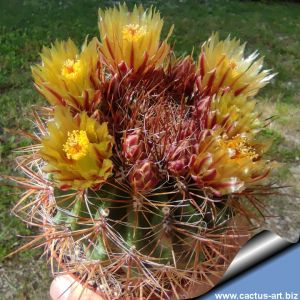
F. chrysacanthus "rubrispinus" is a cultivated form with stunning red spines. It is one of the best and colourfull Ferocacti though quite slow growing. This plant is densely spined and because of that, will tolerate full sun. Beautiful!!!
-
40
The 'victoriensis' variety is lesser common than the standard "echidnae", it has stems that are more cylindrical and sturdy, straight central spines longer than 4,5 cm. The flowers are yellow with reddish tones.
-
41
Ferocactus horridus “brevispinus” is a solitary fast growing little barrel cactus with quite short and stocky cental spine (not enough to call it curved!) This plant becomes very nice when a bit older.
-
42
Ferocactus macrodiscus a.k.a. "Candy cactus" is a medium sized barrel cactus with a depressed stem and blue-green epidermis. Growth from seed is quite rapid and plants will flower when only a few cm across. Flowers are white with purple striped petals.
-
43
A massively spined barrel cactus bearing strong red spines. Produces yellow to straw-yellow flowers marked by a pale red midline on the petals, pleasantly scented.
-
44
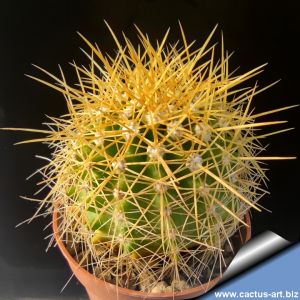
Solitary barrel cactus with bright golden spines. Young specimens resemble Echinocactus grusonii more than a Ferocactus. With age, the number of spines decreases to 0–2.
-
45
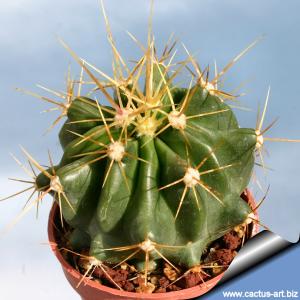
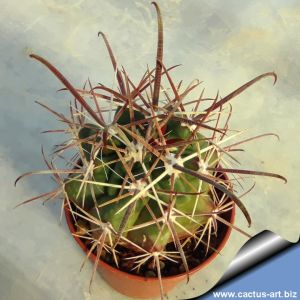
A large globose cactus that may grow into a column exceeding 2 meters. Features a dark green body and strong ornamental spines, straight or gently curved, in shades from pink-red to fiery red.
-
46
-
47
Fascinating species with flat grey-gree to dark-violet body. The spines are usually very reduced but it is quite variable. Flower greenish-yellow to pink.
-
48
-
49
-
50
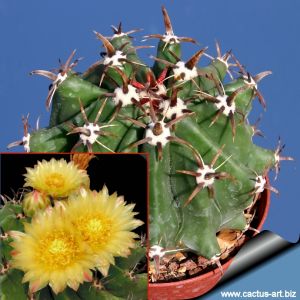
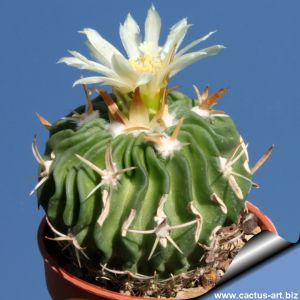
Distinctive species bearing small yellowish blooms and very short, wide, flattened central spines like dried grass leaves, with few radials. Typically 5 spines per areole; the upper central can split into three tips.
-
51
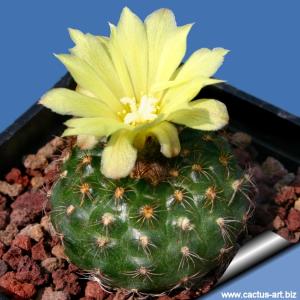
Forms nice clumbs with olive-green stems, yellow-brown spines, yellow flower.
-
52
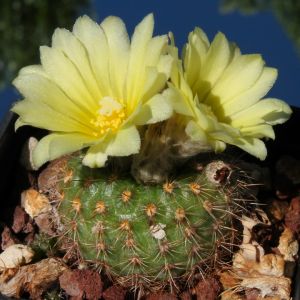
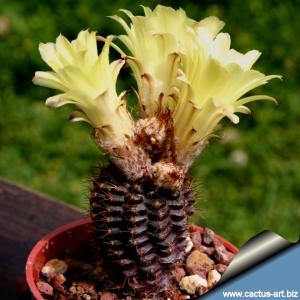
On beautiful summer days one can admire the splendour of its beautiful yellow flower, larger than the plant itself. The diminutive stem is a splendid shining dark-purple, with ginger spines.
Family: Cactaceae (Cactus Family)
-
53
F. schilinzkyana is a tiny odd species with small heads and friendly short spines. On beautiful summer days one can admire the splendour of its beautiful yellow flower, larger than the plant itself.
-
54
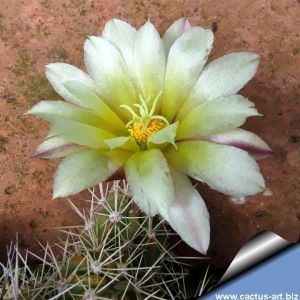
Long, strong central spines. Large pinkish to mauve flowers with a darker center that strikingly contrasts against creamy anthers and a green pistil.
-
55
F. reppenhagenii as old plants are of a small diameter, nearly cereoid growing with usually less than 13 ribs .
-
56
A remarkably showy species featuring coral-red spines and long contrasting white bristles in the areoles. The vivid color contrast gives this cactus a particularly ornamental appeal.
-
57
A slow-growing solitary cactus with an olive-green, greyish or brown stem, flattened at the apex. Long, rigid spines point sideways or downward, lying close like armour. Flowers are cream or pinkish-white with a reddish throat.
-
58
-
59
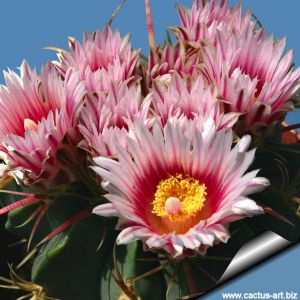
Outstanding and incomparable. The flowers have a shocking yellow-green throat surrounded by a contrasting fuchsia corolla. The inner yellow is like the phosphorescent colour of some pen marker or even more luminescent.
-
60
-
61
Named for the State of Texas where it is widely distributed. it is a round-shaped barrel with numerous flat ribs that grows very low to the ground with short but very thick pink or grey spines that can live for decades.
-
62
This tiny plant is one of the most fascinating and showy cacti! Flowers are of a superlative beauty, opening in the moonlight on a summer night and lasting for only till dawn, but a number are produced in succession.
-
63
Solitary stem yellowish-green to dark olive-green. Ribs are very regularly and attractively wavy. Radial spines 4–6, glassy-white; central spines 3, strongly flattened, brownish-purple, upright, with one distinctly longer.
-
64
Grey-green to bluish stem, solitary or branching at the base with age. 1–4 short dark central spines, often absent in standard subinermis, and 8–9 yellowish radials. Large funnel-shaped canary or cream-yellow flowers with bright green stigmas.
-
65
A solitary barrel cactus broader than high. Bears dense pink or yellowish spines that fade or become yellow to horn-colored over time. Flowers are greenish or golden yellow with brownish central stripes.
-
66
A columnar species thickly coated in white hair. Differs from typical E. melanostele by smaller stems and cephalium wool colored white to pale yellow instead of yellow-brown.
-
67
An extremely variable species with bicoloured flowers: petal tips are magenta-violet, while the throat is greenish-white, creating an almost fluorescent contrast. Spines vary greatly between plants, ranging from creamy yellow to dark grey-brown.
-
68
-
69
Geophytic cactus with solitary stems rising barely above ground level, dull dark green, in the sun often tinged with purple. Spines variable, tannish-brown, dull grey or black, straight to curved. Flowers creamy-white to pink.
-
70
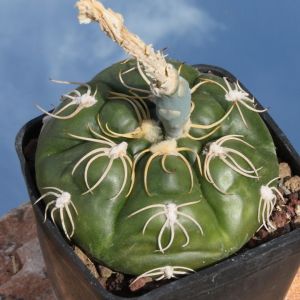
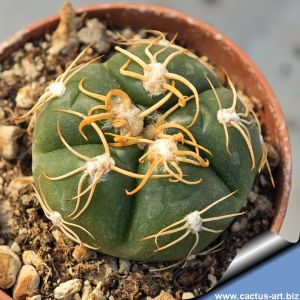
Striking and characteristic form with a flat, rounded body and just five wide ribs. The prominent white areoles bear yellow, more or less curled spines, arranged like little spider legs. This delicate, web-like pattern creates a unique visual appeal.
-
71
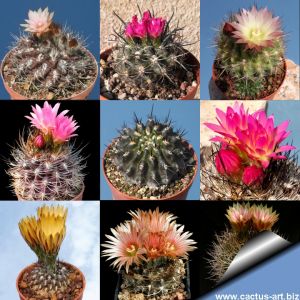
A mix of Eriosyce from the Neoporteria group, assorted with various species and seed-grown hybrids. Each plant is one-of-a-kind, featuring unique shapes, spination, and flower colors.
-
72
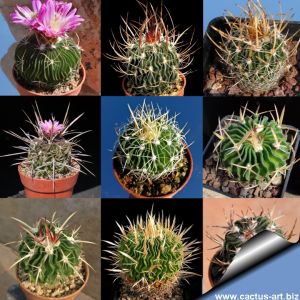
Mix of Echinofossulocactus (Stenocactus), assorted with various species and seed-grown hybrids. Each plant is one-of-a-kind, featuring unique shapes, spination, and flower colors.